
Currently Empty: $0.00
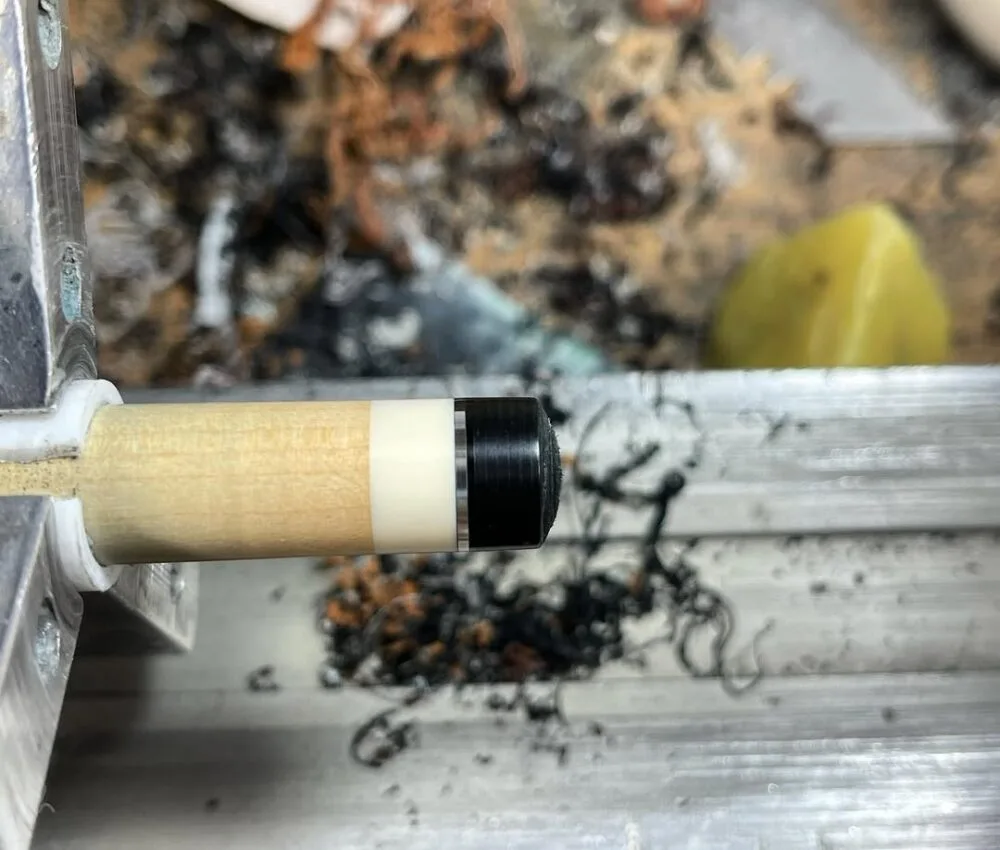
Few upgrades change how a cue plays as much as the shaft, and the carbon fiber pool cue shaft has become the most talked-about upgrade in the game. Once a niche pro item, carbon shafts are now everywhere, promising lower deflection, unbeatable durability, and a consistent hit. But are they worth it over a traditional maple shaft? This guide compares carbon fiber and maple head to head so you can decide which shaft belongs on your cue.
What Is a Carbon Fiber Pool Cue Shaft?
A carbon fiber pool cue shaft is made from layers of woven carbon fiber bonded into a hollow or composite core, rather than turned from solid wood. That construction makes the shaft lighter at the tip end, extremely rigid, and virtually immune to the warping and moisture problems that affect wood. The result is a low-deflection shaft that plays the same on day one and year five.
Carbon Fiber vs. Maple: The Key Differences
Deflection (Squirt)
Deflection is how far the cue ball pushes off-line when you apply sidespin. Traditional maple deflects more, which means you have to compensate more when using English. A carbon fiber pool cue shaft is engineered for very low deflection, so spin shots go closer to where you aim, a huge advantage for consistent position play.
Consistency
Wood is a natural material, so no two maple shafts are identical and each one changes subtly with humidity and age. Carbon fiber is manufactured to tight tolerances, so every shaft feels the same and stays that way. If you value a hit that never changes, carbon has the edge.
Durability
This is where carbon fiber truly shines. It resists warping, does not swell with moisture, and shrugs off the dings and dents that mark up wood. A carbon shaft is close to maintenance-free, while maple needs regular care to stay smooth and straight.
Feel and Feedback
Here maple fights back. Many players love the warm, natural “thock” of a quality maple shaft and the tactile feedback it provides. Carbon fiber has a crisper, more solid feel that some describe as slightly “hollow” at first. Feel is personal: a lot of players who switch to carbon adapt within a few sessions and never look back, while others prefer the classic maple hit.
Pros and Cons at a Glance
Carbon Fiber Pool Cue Shaft: Pros
- Very low deflection for predictable spin
- Warp-proof and moisture-resistant
- Consistent hit that never changes
- Almost no maintenance required
- Slick, fast surface that needs no shaping
Carbon Fiber: Cons
- Higher price than most maple shafts
- A firmer feel that takes some adjustment
- Less of the traditional wood feedback purists love
Maple: Pros
- Warm, classic feel and rich feedback
- More affordable and widely available
- Easy to customize tip and taper
Maple: Cons
- Higher deflection than carbon
- Can warp and reacts to humidity
- Needs regular cleaning and shaping
Who Should Choose a Carbon Fiber Shaft?
A carbon fiber pool cue shaft is an excellent choice if you:
- Play with a lot of spin and want it to be predictable
- Compete or practice often and want equipment that never changes
- Are tired of babysitting a wood shaft against humidity and warping
- Want a long-term upgrade that will outlast several maple shafts
Who Should Stick With Maple?
Maple is still a smart pick if you:
- Love the traditional feel and feedback of wood
- Are on a tighter budget or just starting out
- Enjoy tuning and maintaining your own equipment
Does the Shaft Fit Your Cue?
Before you buy, check the joint. A carbon fiber pool cue shaft must match your cue’s joint type and pin (for example, Uni-Loc, 3/8×10, or radial) to thread on correctly. Many modern cues are sold with carbon shafts included, and aftermarket carbon shafts are available in the most common joint standards. If you are unsure, match the joint on your existing shaft or ask before ordering.
Caring for a Carbon Fiber Shaft
One of the biggest perks of a carbon fiber pool cue shaft is how little upkeep it needs. There is no grain to seal, no warping to worry about, and no shaping required. A quick wipe with a damp microfiber cloth removes chalk and oils and restores the slick surface. You never have to burnish or sand it the way you would a wood shaft. Store it in a case away from extreme heat, keep the tip in good shape, and the shaft itself will essentially take care of itself for years.
Are Carbon Fiber Shafts Worth the Money?
For players who practice or compete regularly, the answer is usually yes. You are paying up front for lower deflection, a hit that never changes, and a shaft that will outlast several wood ones. Spread over years of play, the cost per session is low, and the consistency pays off in your results. For a casual weekend player on a budget, a good maple shaft still offers excellent value, so the honest answer depends on how much you play and how much consistency matters to you.
Frequently Asked Questions
Does a carbon fiber shaft really lower deflection?
Yes. A carbon fiber pool cue shaft is engineered with a lightweight tip end that reduces squirt, so cue-ball response to sidespin is more predictable than with most traditional maple shafts.
Do carbon fiber shafts warp?
No. Unlike wood, carbon fiber does not absorb moisture and is highly resistant to warping: one of its biggest advantages for long-term durability.
Will a carbon shaft fit my existing cue?
Only if the joint and pin match. Carbon shafts are made for specific joint standards such as Uni-Loc, 3/8×10, and radial. Check your current shaft’s joint or ask before buying to be sure it threads on correctly.
Do carbon fiber shafts feel different from wood?
Yes, slightly. Carbon has a crisper, more solid hit, while maple feels warmer with more traditional feedback. Most players adjust to carbon within a few sessions.
The Bottom Line
A carbon fiber pool cue shaft delivers lower deflection, rock-solid consistency, and near-zero maintenance, a genuine performance upgrade for players who want the most predictable spin and the toughest build. Maple still wins on tradition, feel, and price. Choose carbon for cutting-edge consistency, or maple for classic character. Either way, the right shaft makes every shot easier. Explore cues with modern low-deflection and carbon options in our pool cue collection and feel the difference for yourself.
