
Currently Empty: $0.00
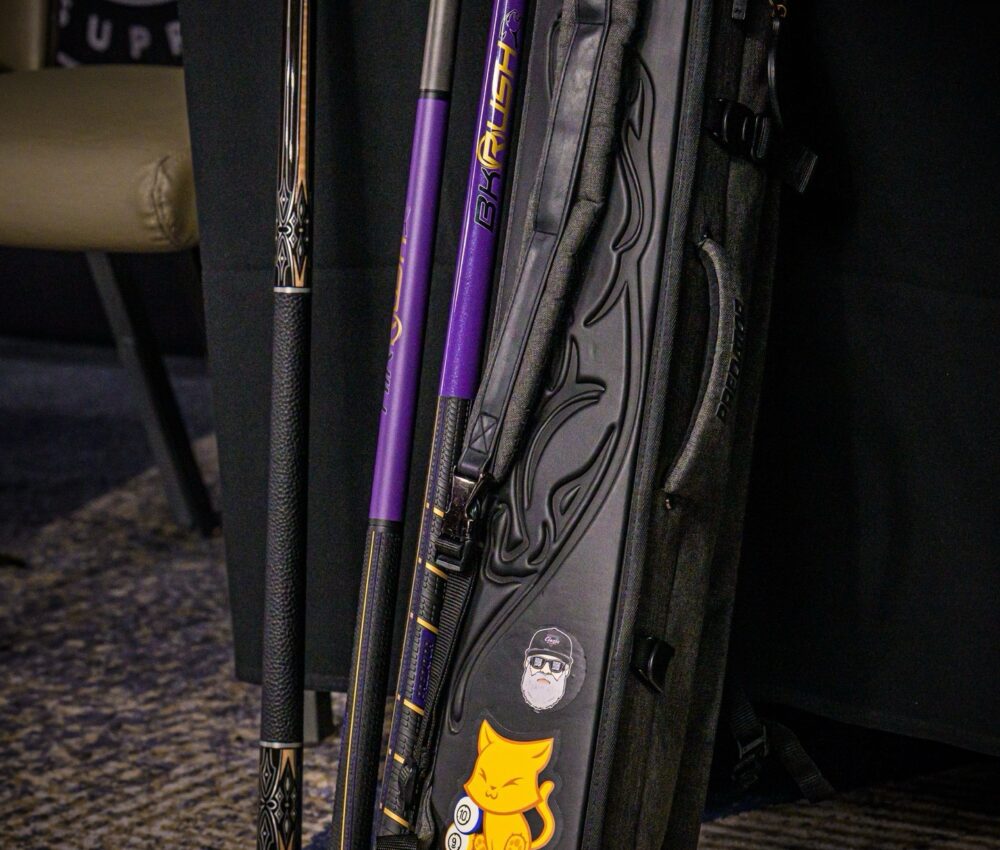
Ask any seasoned player and they will tell you: the break cue vs playing cue question is not about which is better — it is about using the right tool for the right job. Breaking and running position are two completely different demands, and one cue cannot do both well without paying a price. In this guide we break down exactly how these cues differ, why using a separate break cue protects your game, and how to choose the right one for the way you play.
Break Cue vs Playing Cue: The Short Answer
A playing cue is built for finesse — accurate aim, controlled spin, and precise cue-ball position. A break cue is built for one violent moment — transferring maximum energy into the rack while surviving the impact. The break cue vs playing cue difference comes down to tip hardness, shaft stiffness, weight, and durability. Mix the roles up and you either lose control on your shots or destroy your good cue’s tip.
What Makes a Playing Cue Different
Your playing cue is the one you use for 95% of your shots, so it is optimized for feel and accuracy.
- Softer to medium tip: Grips the ball to generate draw, follow, and English.
- Low-deflection shaft: Keeps sidespin predictable so your position play is repeatable.
- Balanced weight (18–19.5 oz): Encourages a smooth, controlled stroke.
- Comfortable wrap: A secure grip for long, focused sessions.
Everything about a playing cue is tuned for touch. That same tuning is exactly what makes it a poor choice for breaking.
What Makes a Break Cue Different
A break cue exists to deliver a powerful, square hit and spread the rack. It is built tough.
- Hard tip (often phenolic or a firm leather): Transfers energy efficiently and resists mushrooming under impact.
- Stiffer shaft: Loses less energy to flex, sending more power into the cue ball.
- Slightly heavier or specially balanced: Many players break best with a cue that helps them accelerate through the ball.
- Rugged construction: Designed to absorb hundreds of hard hits without wearing out.
When you compare break cue vs playing cue construction side by side, the break cue is essentially a purpose-built power tool.
Why You Should Not Break With Your Playing Cue
It is tempting to save money and use one cue for everything, but breaking with your playing cue causes real damage over time:
- Tip wear: The soft tip that gives you spin mushrooms and flattens under break impact, ruining its shape.
- Shaft stress: Repeated hard hits can loosen the ferrule and, over time, affect the shaft’s integrity.
- Joint fatigue: The joint takes heavy shock on every break, accelerating wear.
- Lost consistency: A worn tip changes how your cue plays, and you may not notice until your position game quietly falls apart.
A dedicated break cue protects the investment you made in your playing cue. That alone makes it worth owning.
Do You Also Need a Jump Cue?
Many players eventually add a third cue — a jump cue — or choose a combination break/jump cue. Jump cues are short and light, designed to lift the cue ball cleanly over an obstructing ball. If you play a lot of open-table games, a break/jump combo is an efficient way to cover both specialty shots with one purchase. It is a natural next step once you understand the core break cue vs playing cue split.
How to Choose Your Break Cue
Match Your Break Style
If you break with speed and finesse, a lighter break cue helps you accelerate. If you break with raw power and a square hit, a slightly heavier cue may suit you better. There is no universal answer — it depends on your mechanics.
Prioritize the Tip
The tip is the heart of a break cue. Phenolic tips deliver the most energy transfer but require good accuracy; firm leather break tips are more forgiving. Beginners often start with a quality leather break tip and move to phenolic as their break improves.
Consider Grip and Control
A break is only powerful if it is accurate. A secure wrap and a cue you can control at speed will spread the rack far better than brute force with a cue that twists in your hand.
Building the Ideal Two-Cue Setup
The classic setup for a committed player is simple: one low-deflection playing cue for everything except the break, and one dedicated break cue (or break/jump combo) for the opening shot. This pairing gives you the best of both worlds — precise control when you need touch, and reliable power when you need to open the table.
Can a Beginner Skip the Break Cue?
When you are brand new, a single cue is fine while you learn the fundamentals. But the moment you start playing several times a week — or you invest in a quality low-deflection playing cue — a break cue becomes worthwhile. Think of it as a small purchase that protects a larger one. Even an affordable dedicated break cue will save your good tip from the repeated hammering a break delivers, and most players notice their break improves once they use a cue built for the job.
Frequently Asked Questions
Can you break with a regular playing cue?
You can, but it damages the cue over time. The soft playing tip mushrooms under break impact, and the shaft and joint absorb heavy shock. For occasional casual play it is fine; for regular play, use a dedicated break cue.
Should a break cue be heavier or lighter?
It depends on your break style. Players who break with speed and timing often prefer a lighter break cue they can accelerate, while players who rely on a powerful, square hit may prefer a heavier one. Accuracy matters more than raw weight — a controlled break spreads the rack better than a wild one.
What is a break/jump cue?
A break/jump cue is a versatile cue that converts between a break cue and a short jump cue, letting you cover two specialty shots with one purchase. It is a popular, space-saving choice for players who face a lot of open-table situations.
Do I really need three cues?
No. Many players are happy with just a playing cue and a break cue. A jump cue (or break/jump combo) is a useful third option, but it is optional and depends on the games you play most.
Final Thoughts
The break cue vs playing cue debate is really no debate at all: each cue is engineered for a job the other cannot do well. Use a playing cue for control and a break cue for power, and both your shot-making and your equipment will last longer. Ready to complete your setup? Explore our pool cues and break cues and build the two-cue arsenal that fits your game.
